
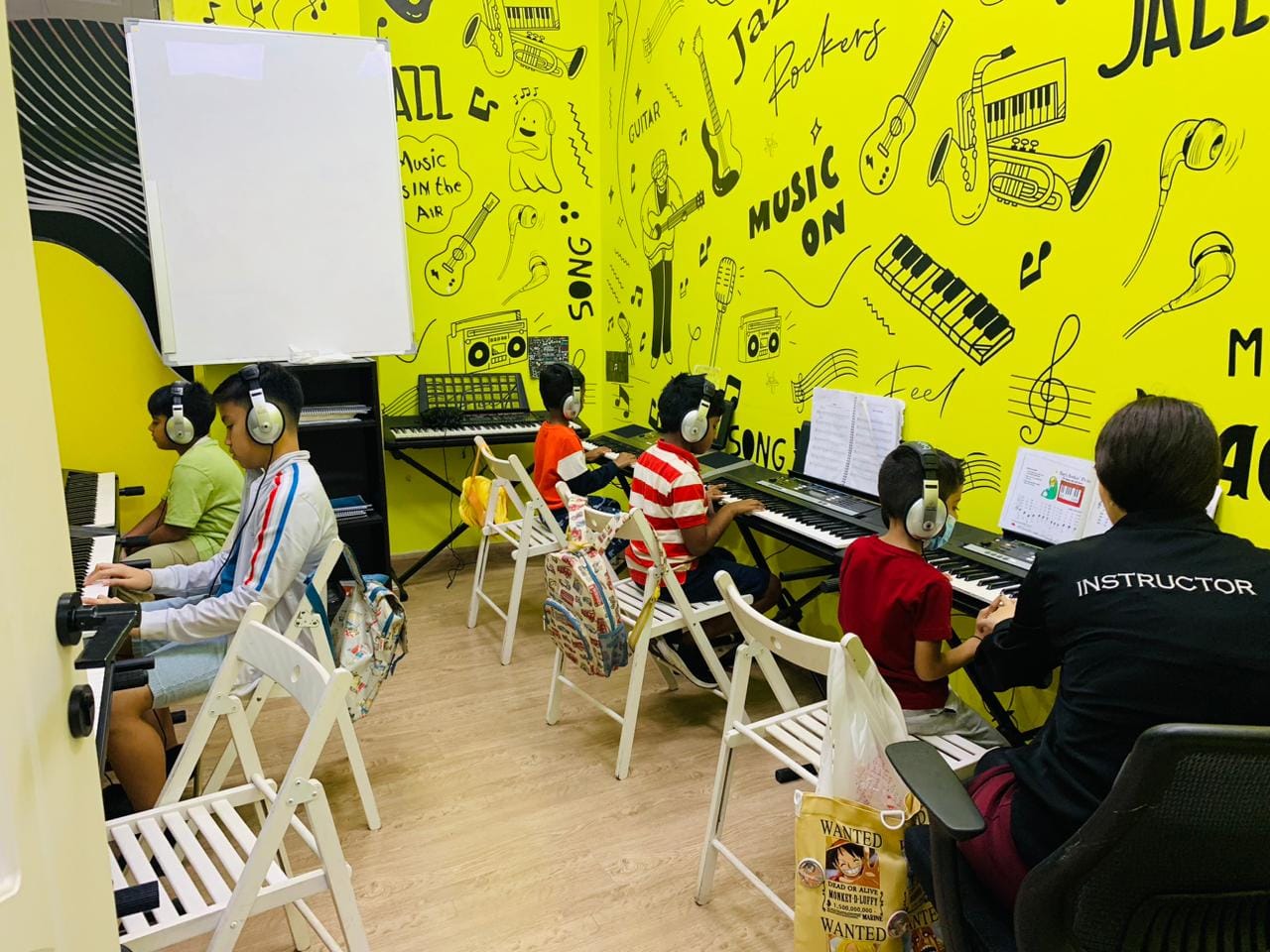
The piano is one of the most challenging instruments to learn and teach, as it requires precise finger movement, strong hand-eye coordination, and the ability to read and combine multiple keys to create melodies and full songs.
Piano lessons for children go beyond simply learning notes. They help develop focus, timing, discipline, and coordination. Taking short breaks during practice is important, as it allows the mind to relax and improves concentration when learning resumes. However, too many breaks can reduce momentum, so finding the right balance is key. Practicing for about 15 minutes every hour helps maintain steady progress. Patience is especially important for beginners, as pressure can increase stress and reduce confidence. Positive reinforcement helps students learn better and enjoy the process.
One of the greatest joys of playing the piano is feeling the rhythm and allowing the music to flow naturally. Encouraging students to relax, close their eyes, and connect emotionally with the music helps them play more smoothly and confidently. This turns learning into an enjoyable experience rather than a task.
In addition, exercises outside of lessons — such as finger drills, rhythm practice, and coordination activities — help improve accuracy, focus, and performance. Even activities like playing video games can enhance hand-eye coordination, which supports faster and more accurate key recognition during piano practice.
